Protecting Costly Appliances with Advanced Earthing Technology
Earthing is not just a technical requirement—it is the foundation of electrical safety. Unfortunately, many industries, commercial establishments, and homeowners approach earthing with a limited perspective. When they need an earthing system, they often choose between two common options:
- Chemical Earthing
- Conventional salt and charcoal earthing using GI electrodes or copper rods/plates
Most people then search for the cheapest available solution in the market, assuming the project is complete once the installation is done. What they often overlook is the actual resistance value their earthing system provides, and whether it can truly sustain fault currents within milliseconds.
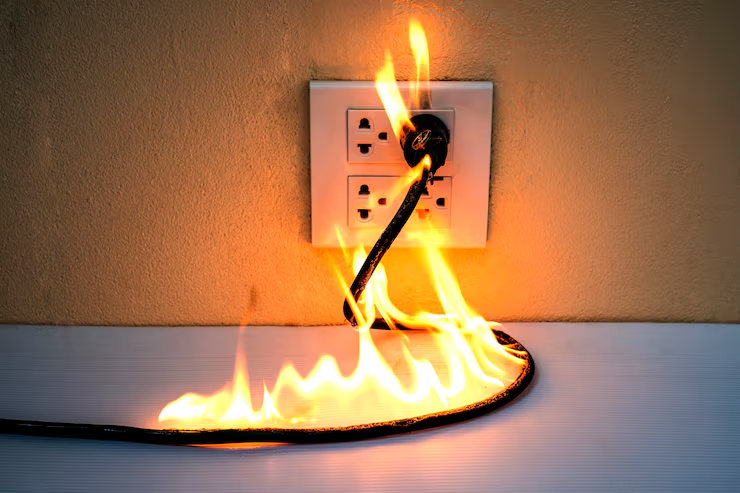
This lack of awareness is one of the leading causes of electrical fires. Why? Because poorly designed earthing systems fail to trip protective devices like MCBs (Miniature Circuit Breakers) and RCBs (Residual Current Breakers) in time, leaving both people and equipment vulnerable.

Compliance with IS:3043 and Global Best Practices
At our company, we believe that earthing must be engineered, not improvised. Our methodology is built on precision, safety, and compliance with international standards.
1. Soil Resistivity Analysis
- Every project begins with a detailed study of soil resistivity.
- This analysis provides our engineers with critical insights into how the earthing system should be designed for that specific site.
2. Electrode Surface Area Calculation
- Based on soil resistivity, our experts calculate the exact surface area of electrodes required.
- This ensures that fault currents are discharged into the earth within milliseconds, protecting both human life and electrical infrastructure.
3. Application Load Consideration
- The design is matched to the connected load and the maximum fault current of the installation.
- Electrode size, number of pits and conductor cross-section are selected to suit the application.
4. Compliance with Standards
- Every earthing system is designed and tested in line with IS:3043 and CEA regulations.
- Final earth resistance values are measured, verified and documented at handover.
Complete Earthing Solutions for Electrical Safety
Ensures Human Safety
Protects against electric shocks and hazardous leakage currents.
Safeguards Equipment
Minimizes damage to sensitive machinery and electronics.
Delivers Predictable Performance
Even in unpredictable soil conditions, our methodology ensures consistent results.

Prevents Electrical Fires
Properly designed earthing ensures timely tripping of MCBs and RCBs.