Chemical Earthing Solutions in India | IS 3043 & CEA Compliant in India | IS 3043 & CEA Compliant in India – Safe, Reliable & Standards-Compliant Earthing Systems by Earthing World
When it comes to electrical safety, chemical earthing has emerged as one of the most preferred solutions across India. Often promoted as a quick and effective method, chemical earthing is far more than a simple installation — it is a critical safeguard that protects human life and expensive electrical equipment from fault currents.
At Earthing World, India's trusted name in earthing technology, we specialise in delivering engineered chemical earthing solutions that are durable, compliant with Indian Standards (IS:3043, IS 732, and CEA regulations), and tailored to your site's soil conditions. Whether you are a homeowner, a commercial establishment, or a large-scale industry, choosing the right earthing system is a decision that demands technical expertise — and that's exactly what we bring to the table.
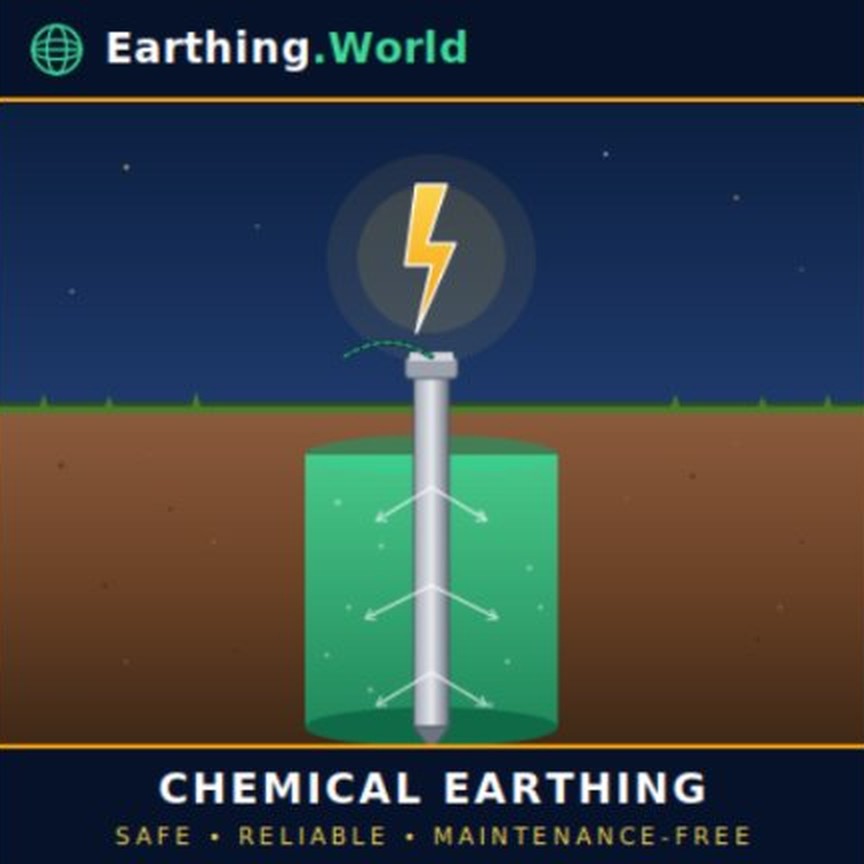
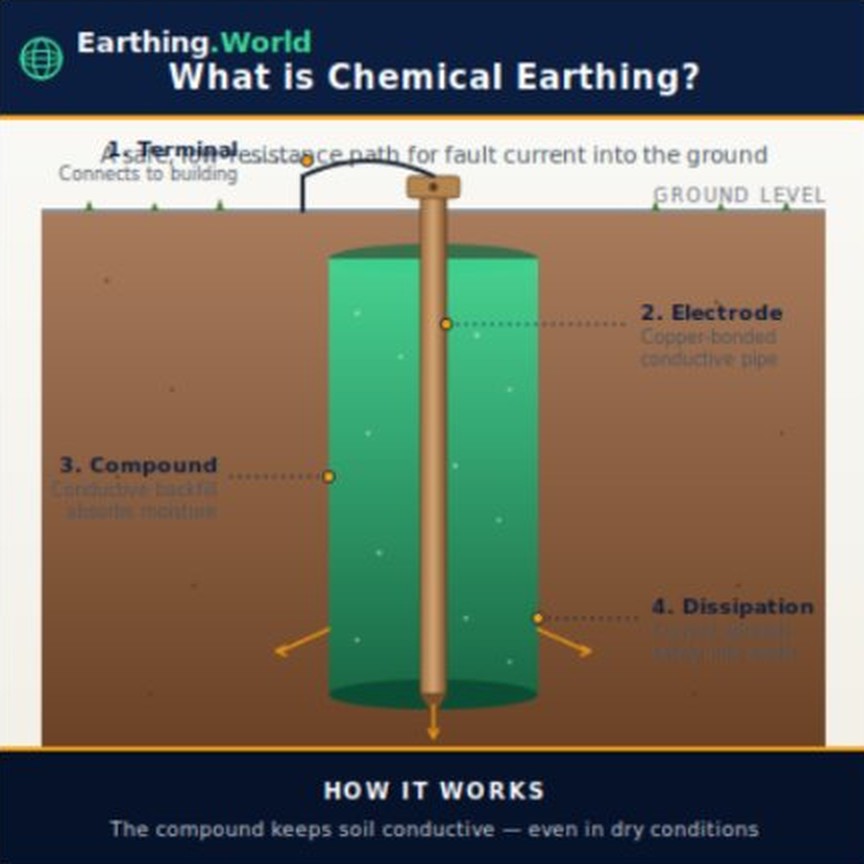
Chemical earthing is a modern earthing method in which a 17.2 mm earthing rod (electrode) is installed inside a bore filled with a special earthing compound (typically Bentonite clay and conductive salts). The compound enhances soil conductivity and ensures stable, low-resistance dissipation of fault currents into the ground.
Compared to conventional pipe or plate earthing, chemical earthing offers:
"The team delivered a well-engineered earthing solution that significantly improved electrical safety and system reliability. Their understanding of standards, site conditions, and long-term performance was evident throughout the project."
Rajesh Mehta
"We were looking for a dependable earthing system to protect our home and appliances. The customized solution, detailed testing, and professional execution gave us complete confidence in the safety of our electrical setup."
Anita Sharma
"From initial assessment to final implementation, the process was technically sound and well-managed. The earthing system has improved power stability and ensured better protection for sensitive equipment."
Vikram Singh
"The engineers demonstrated strong technical expertise and a clear focus on safety and compliance. Their testing, documentation, and execution met our expectations and delivered long-term reliability."
Neha Negi
01 / 04
Submit Enquiry
Book an Appointment
Receive an accurate quote within 3-5 days when you fill out the form on this page. Or, give us a call: (+91 72900 43400)
Why Choose Earthing World for Chemical Earthing in India?
A name that stands for safety
Pan-India Service Network – Trusted by clients across Delhi, Mumbai, Bangalore, Hyderabad, Chennai, Ahmedabad, and beyond
IS:3043 & CEA-Compliant Solutions – Every product meets Indian electrical safety standards
Premium Bentonite & Earthing Compounds – Sourced directly from Gujarat
Qualified Earthing Experts – Site-specific recommendations, not generic sales pitches
End-to-End Service – From soil resistivity testing to installation and post-installation support
Trusted by Homes, Businesses & Industries – A name that stands for safety
Earthing.World
Role of Chemicals in Chemical Earthing
The performance of any chemical earthing system depends heavily on the earthing compound used. Earthing World uses premium-grade chemicals to maximise efficiency and life span.
Chemical Earthing Installation Process – Step By Step
The chemical earthing installation process by Earthing World follows a precise, standards-compliant methodology:
Step 01 / 05
01
Drilling the Bore
A bore of approximately 100 mm diameter is drilled to a depth of about 3 metres.
02
Electrode Placement
A 17.2 mm chemical earthing rod is positioned exactly at the centre of the bore for uniform performance.
03
Filling the Earthing Compound
The empty space around the electrode is filled with high-grade Bentonite clay and conductive salts.
04
Water Activation
A measured quantity of water is added to ensure tight soil contact and eliminate air pockets that increase resistance.
05
Final Inspection & Testing
The earth resistance is measured to confirm compliance with IS:3043 standards.
This systematic approach ensures every Earthing World installation delivers reliable, long-term safety performance.
+−+−−++−
Earthing.World
Salts – The Engine of Ionic Conduction
Specially formulated conductive salts are blended with Bentonite to enhance ionic conduction. Once dissolved in water, these salts create a conductive medium that allows electrons to travel efficiently through the soil — significantly improving fault current dissipation.
Why Earthing is Critical for Electrical Safety in India
Earthing systems are not optional — they are a legal and life-safety necessity. A properly designed earthing system:
Prevents electric shocks to people in homes, offices, and factories
Protects sensitive equipment from damage caused by fault currents and lightning
Ensures compliance with IS:3043, IS 732, and CEA Regulations
Reduces downtime in industrial and commercial operations
Provides peace of mind through certified, reliable installation
Investing in a quality earthing system from Earthing World is an investment in protection, compliance, and long-term performance.
Why Expert Guidance Matters in Choosing an Earthing System
Selecting the right earthing solution is not a one-size-fits-all decision. The ideal system depends on:
Soil type and resistivity
Local groundwater conditions
Application — residential, commercial, or industrial
Compliance and safety requirements
Unfortunately, many homeowners, businesses, and even industries in India choose earthing systems blindly — based purely on cost — and end up compromising safety. Earthing World's qualified earthing experts evaluate your site, recommend the best-suited solution (chemical, copper bonded, GI, or hybrid), and ensure compliance with all relevant Indian standards.
Frequently Asked Questions (FAQs) – Chemical Earthing Solutions in India
No. While chemical earthing requires less maintenance than conventional methods, it is not truly maintenance-free. Salts can leach over time and the system may need recharging.
A well-installed chemical earthing system from Earthing World typically lasts 10–15 years, depending on soil and climatic conditions.
Yes. Chemical earthing is ideal for residential buildings, especially in urban areas with limited installation space.
Yes. Earthing World's chemical earthing systems comply with IS:3043, IS 732, and CEA regulations.
The standard depth is approximately 3 metres, with a 100 mm diameter bore and a 17.2 mm electrode.
Bentonite Clay – The Backbone of Chemical Earthing
Sourced primarily from Gujarat, India, Bentonite clay is renowned for its exceptional ability to absorb water and swell. In a chemical earthing system, Bentonite:
Retains moisture around the electrode for extended periods
Acts as a thermal shield, protecting the rod from heat damage
Stabilises soil resistivity for consistent earthing performance
Reduces the impact of seasonal changes on earth resistance
How Chemical Earthing Works – The Principle of Ionic Conduction
Chemical earthing operates on the scientific principle of ionic conduction. Electrons require a medium to flow, and the salts present in the earthing compound act as that medium by releasing ions when dissolved in water.
This ion movement allows the soil to:
Safely absorb fault currents
Dissipate electrical energy quickly into the ground
Protect both people and electrical equipment from harm
In simple terms, chemical earthing turns the surrounding soil into an efficient conductor — a vital function for every modern electrical installation.
Many vendors market chemical earthing as a "maintenance-free earthing system", but at Earthing World, we believe in transparency. Here are the real-world limitations every buyer in India should understand:
Rainwater Leaching: Continuous rainfall can dissolve salts in the earthing compound, causing them to leach deeper into the soil.
High Groundwater Levels: If the water table lies within the earthing depth, salts may wash away faster than expected.
Resistance Build-Up Over Time: As salts deplete, earth resistance increases, gradually reducing system performance.
Recharging Required: Periodic recharging or replacement of the earthing compound is necessary in many Indian climatic conditions — especially in coastal and high-rainfall regions.
This is why expert consultation and routine inspection are essential for long-term reliability.