
Pipe Earthing Solutions: Safer, Corrosion-Resistant Grounding
Pipe earthing is one of the most trusted ways to ground an electrical system — but only when it is engineered for your soil, not installed by habit…
(Sirf “[TOFU – hero]” label delete karna hai — paragraph same rahega)
IS 3043 compliant • GI, Copper-Bonded & Advanced Fill • Soil-tested design • PAN-India installation
What Is Pipe Earthing?
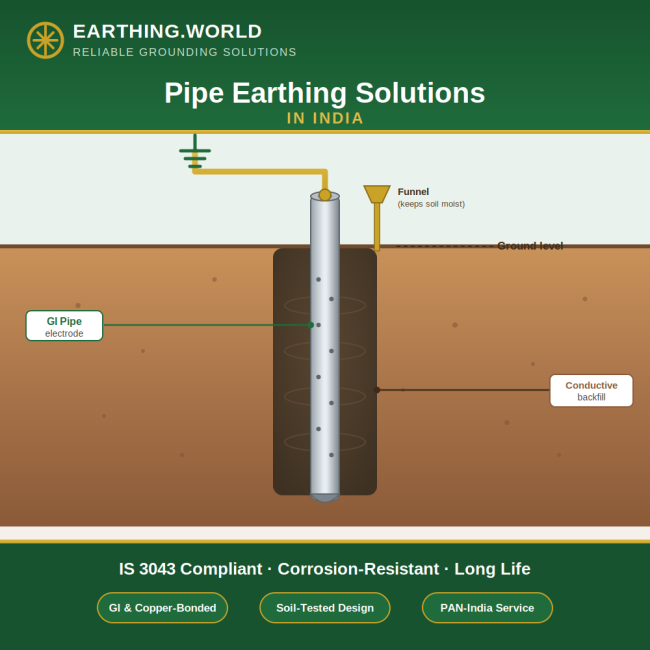
Pipe earthing — also called pipe type earthing — is a grounding method in which a metallic pipe is buried vertically in the soil and used as the earth electrode. When a fault current appears, the pipe gives it a low-resistance path to dissipate safely into the ground — usually within milliseconds — protecting both people and equipment from electric shock and fire.
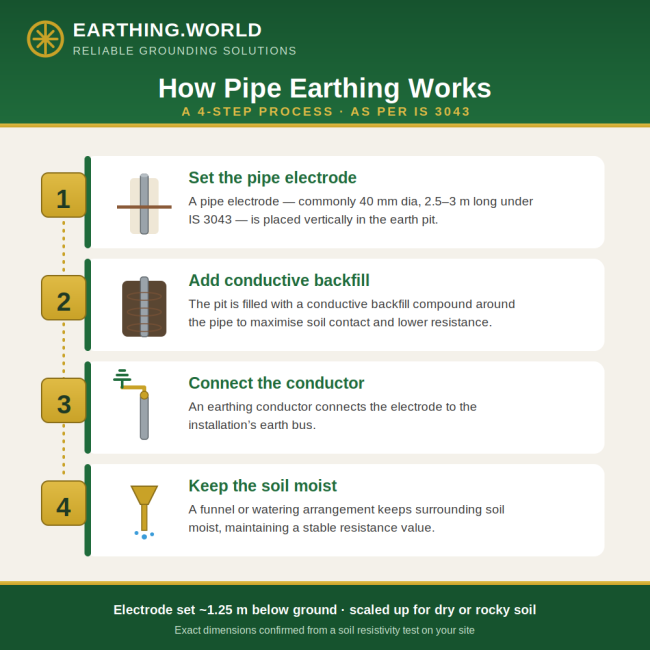
How a pipe earthing system works
- A pipe electrode (commonly 40 mm dia, 2.5–3 m long under IS 3043) is set vertically in an earth pit.
- The pit is filled with a conductive backfill compound around the pipe to maximise soil contact and lower resistance.
- An earthing conductor connects the electrode to the installation’s earth bus.
- A funnel or watering arrangement keeps the surrounding soil moist, maintaining a stable resistance value.
Typical specs follow IS 3043: a 40 mm GI pipe in a treated earth pit, with the electrode placed roughly 1.25 m below ground level, scaled up for dry or rocky soil. (We confirm exact dimensions from a soil resistivity test on your site.)
Testimonial
What People Saying About Our Services
Rajesh Mehta
“The team delivered a well-engineered earthing solution that significantly improved electrical safety and system reliability. Their understanding of standards, site conditions, and long-term performance was evident throughout the project.”
Anita Sharma
“We were looking for a dependable earthing system to protect our home and appliances. The customized solution, detailed testing, and professional execution gave us complete confidence in the safety of our electrical setup.”
Vikram Singh
“From initial assessment to final implementation, the process was technically sound and well-managed. The earthing system has improved power stability and ensured better protection for sensitive equipment.”
Neha Negi
“The engineers demonstrated strong technical expertise and a clear focus on safety and compliance. Their testing, documentation, and execution met our expectations and delivered long-term reliability.”
Submit Enquiry
Book an Appointment
Review an accurate quote within 3-5 days when you fill out the form on this page. Or, give us a call: (+91 72900 43400)
The GI Pipe Myth — Why “Galvanised” Doesn’t Mean “Corrosion-Proof”
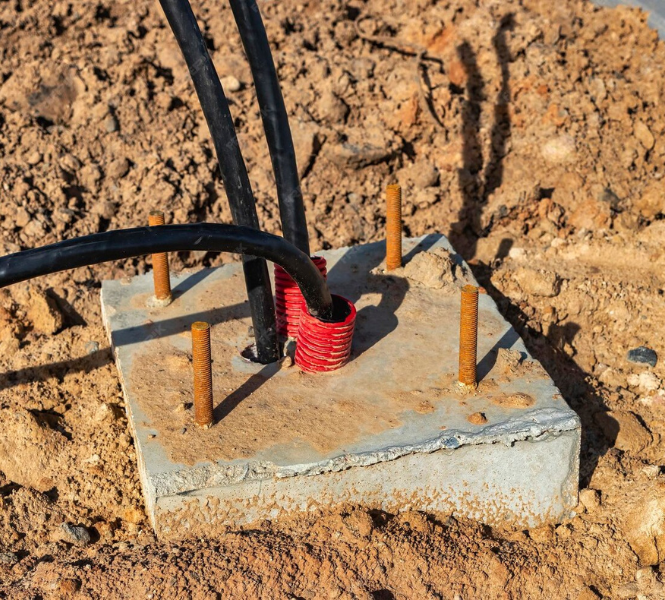
In India, pipe earthing is often treated as a synonym for Galvanised Iron (GI) pipe. The assumption is that because GI resists rust above ground, it must last underground too. In our field experience, that assumption is where a lot of earthing systems quietly fail.
Above ground, as poles or structural supports, GI’s zinc coating does resist corrosion well. Once buried, the same pipe is exposed to moisture, dissolved salts and swinging soil pH. These accelerate corrosion, the zinc layer is consumed, and earth resistance creeps upward — often without anyone noticing until a fault reveals it. Choosing GI by default, without checking soil conditions and expected life, is how a system passes commissioning yet becomes unsafe within a few years.
Engineer’s note
A correctly sized GI pipe electrode can actually offer lower earth resistance than a much more expensive copper plate of standard dimensions — IS 3043 itself acknowledges this. The problem with GI is rarely conductivity; it is service life in aggressive soil. That distinction is what our designs are built around.
Our Pipe Earthing Process – Step by Step
Site & soil assessment
Soil resistivity test and fault-level review.
Design & material recommendation
Electrode type, size, depth and backfill, sized to IS 3043.
Supply & installation
Compliant electrodes, conductive fill and proper pit construction.
Testing & commissioning
Earth resistance verified and documented.
Maintenance & retesting
Scheduled checks to keep resistance low over time.
Frequently Asked Questions (FAQs) – Pipe Earthing Solutions India
What is pipe earthing?
Pipe earthing is a grounding method where a metal pipe buried vertically in the soil acts as the earth electrode, giving fault current a low-resistance path into the ground to protect people and equipment.
What is the standard pipe size for earthing?
Under IS 3043, a 40 mm diameter GI pipe, 2.5–3 m long, in a treated earth pit is common, with the electrode placed about 1.25 m below ground level. Dry or rocky soil may need a longer pipe. Exact sizing follows a soil resistivity test.
Pipe Earthing vs Plate Earthing vs Rod Earthing
Neither is universally better. Pipe earthing suits sandy, dry or rocky (high-resistivity) soil because it reaches deeper conductive layers, while plate earthing suits moist, clayey soil. The right choice depends on your soil and fault levels.
Does GI pipe earthing corrode?
Yes. Although GI resists corrosion above ground, once buried it is exposed to moisture, salts and varying pH that consume the zinc coating over time. In aggressive soil, copper-bonded electrodes or advanced conductive backfills like Marconite or Duraphite last far longer.
Is pipe earthing compliant with Indian standards?
A properly designed pipe earthing system complies with IS 3043, IS 732 and CEA regulations. Earthing.World documents every installation against these standards and provides earth resistance test reports.
Get a Free Earthing Consultation from Earthing World
…for a free site assessment and a customised pipe earthing solution that meets Indian safety standards.
📞 Call Now | 📧 Request a Quote
Earthing World – India’s Trusted Partner in Electrical Safety & Earthing Solutions.