
Earthing.World
Why Standard Earthing Fails — And How Engineered Backfill Solves It
Conventional earthing installations use salt and charcoal as backfill around the earth electrode. This approach has a fundamental weakness: it depends entirely on soil moisture to conduct. In dry conditions — peak summer, rocky terrain, or sandy substrates — salt-charcoal backfill dries out, resistivity spikes, and the earthing system that passed its commissioning test quietly stops performing to specification.
The consequences are invisible until a fault occurs. Then they are catastrophic.
Salt corrodes the copper or GI electrode over time, progressively increasing resistance. It leaches into surrounding soil and groundwater. It requires periodic replenishment — every 1–3 years — or earth resistance climbs above safe levels. Annual maintenance testing is mandatory precisely because the system is unreliable by design.
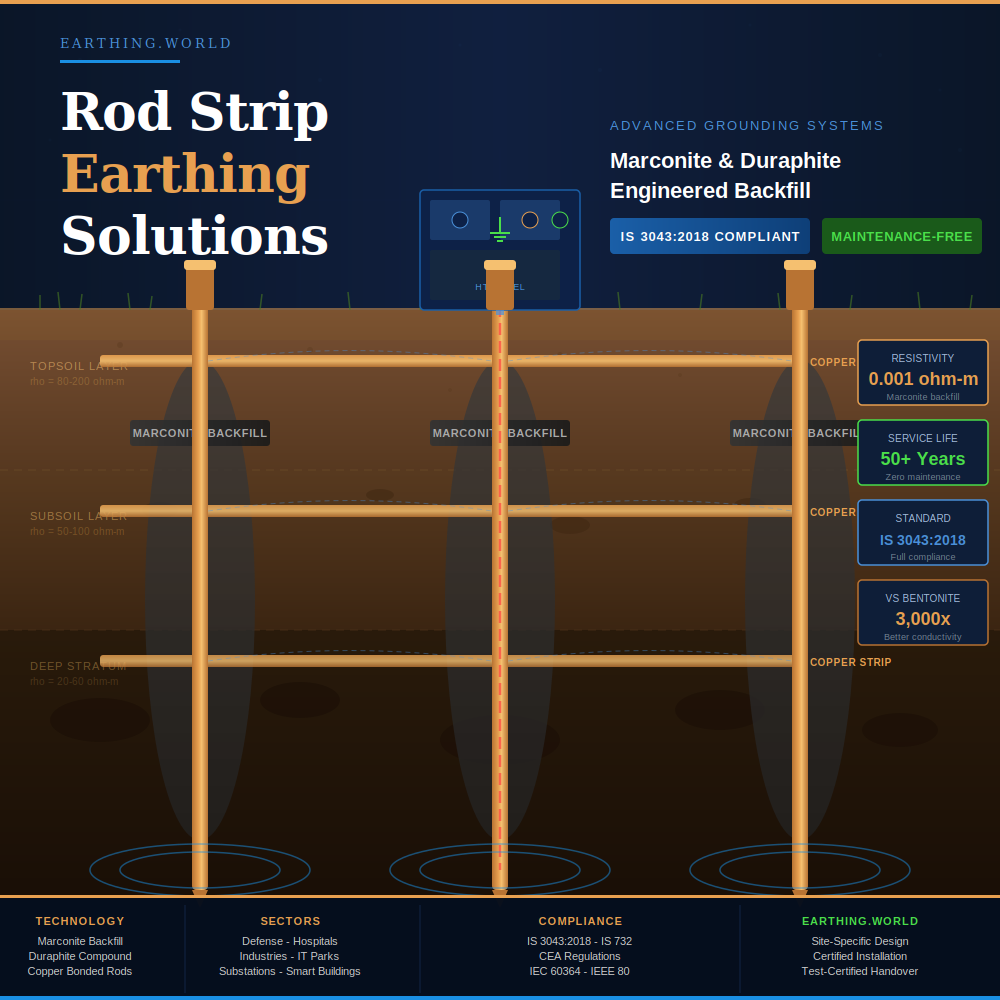
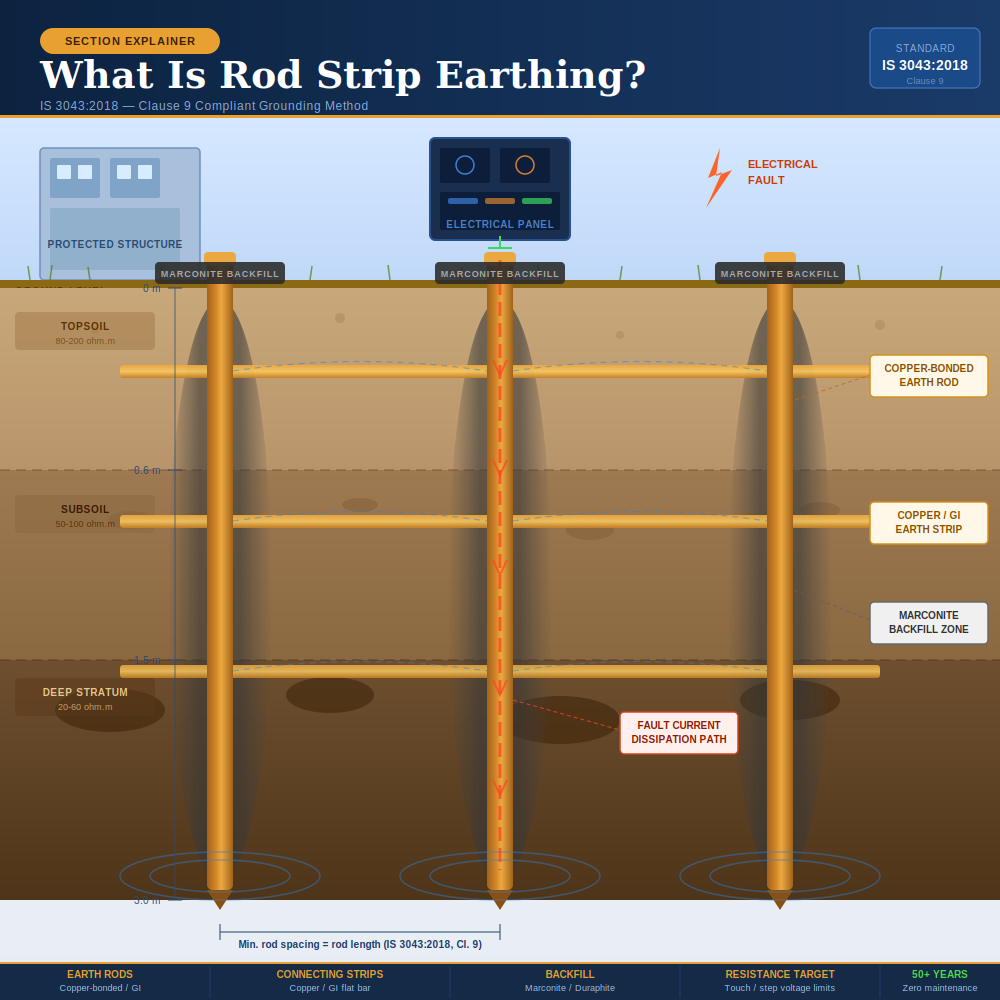
Marconite and Duraphite eliminate all of these failure modes — permanently.
The consequences are invisible until a fault occurs. Then they are catastrophic.
The real-world problems with conventional backfill:
Salt corrodes the copper or GI electrode over time, progressively increasing resistance. It leaches into surrounding soil and groundwater. It requires periodic replenishment — every 1–3 years — or earth resistance climbs above safe levels. Annual maintenance testing is mandatory precisely because the system is unreliable by design.
Marconite and Duraphite eliminate all of these failure modes — permanently.